

What to Say at a Graveside Tribute With Love

A graveside tribute does not need perfect language. It needs an honest heart. If you are wondering what to say at a graveside tribute, begin with the simplest truth: who this person was to you, what you miss, and the love you still carry.
The setting can make even familiar words feel hard to find. There may be family members gathered nearby, flowers resting on the grave, or a quietness that makes every sentence feel larger. You do not have to fill that quietness. A few sincere words, spoken gently, can be enough.
What to Say at a Graveside Tribute
A meaningful tribute often includes three small parts: a greeting to your loved one, a memory or quality you want to honor, and a closing expression of love, peace, or faith. You may speak for one minute or several. The right length is the one you can say with care.
You might begin with words such as:
“Dear Mom, we are here because we love you and miss you every day.”
“Today, we remember the kindness you gave so freely and the place you will always hold in our family.”
“We came to tell you that you have not been forgotten. Your life continues to shape ours.”
These words are not meant to sound formal. They are meant to sound like you. If your loved one appreciated humor, it is all right to share a gentle, appropriate memory that brings a smile. If your relationship was complicated, you do not need to pretend otherwise. You can honor the truth with grace: “We remember the good you brought into this family, and we continue to hold you in our hearts.”
Start With a Memory They Would Recognize
The most comforting graveside remarks are often specific. Instead of trying to describe an entire life, choose one detail that reflects the person you are honoring. It might be the way they made Sunday breakfast, their faithful phone calls, the song they always played in the car, or the calm advice they gave when life felt uncertain.
A specific memory gives those present something real to hold onto. For example: “I still think of your hands in the garden, patient and steady, making room for every new flower. You taught us to care for what we love.”
You can also name a quality that remains part of the family’s story. “Your generosity was never loud, but it was always there. We see it now in the way your children care for others.” This kind of tribute honors both the person’s life and the lasting influence they leave behind.
If tears come, pause. There is no need to apologize. Grief is not a failure of composure. It is love responding to absence.
Keep the Words Simple When Grief Is Heavy
Sometimes the heart is full but language will not come. In that moment, short words can carry deep meaning. You may say, “I love you. I miss you. Thank you.” You may say their name and simply add, “Rest peacefully.”
Here are a few brief sentiments that can be read aloud at the graveside:
“You are loved beyond words and missed beyond measure.”
“Your memory remains a blessing in our lives.”
“Though we cannot see you, we carry you with us.”
“May you rest in God’s loving care.”
“We will keep telling your stories and speaking your name.”
There is no requirement to speak at all. A hand placed on the headstone, a moment of silence, or the laying of flowers can be a tribute in itself. For some families, the most fitting words are spoken privately after others have stepped away.
Include Faith When It Brings Comfort
For many families, prayer offers a gentle way to place sorrow, gratitude, and hope before God. A graveside prayer does not have to be long or written by someone else. It can be as simple as asking for peace for the one who has died and comfort for those who remain.
You might say: “Heavenly Father, thank You for the life of our beloved. Thank You for the love they gave and the memories we treasure. Hold them in Your peace, and give our family strength and comfort until we are together again. Amen.”
A Christian family may wish to include a familiar verse or the Lord’s Prayer. Families of other faith traditions may choose words, readings, or blessings that reflect their own beliefs. If faith is not part of the person’s life, a nonreligious reflection can be just as meaningful: “May this place be one of peace. May we remember your life with gratitude, and may love remain between us.”
The purpose is not to perform a ceremony perfectly. It is to create a moment that feels true to the person being remembered.
If You Are Speaking for Someone Who Cannot Attend
Distance, illness, work responsibilities, and emotional difficulty can make it impossible to stand at the graveside in person. That does not make your love less present. When reading a message on someone else’s behalf, say clearly who it comes from and let the message remain personal.
For example: “This message is from your daughter, who wishes she could be here today. She wants you to know that she thinks of you often, keeps your photograph close, and carries your love into her own family.”
A message from a child, grandchild, sibling, or close friend can include a familiar form of address: “Grandpa,” “My dear friend,” or “Mom.” It may mention a recent milestone, a birthday, an anniversary, or a simple promise: “We will take care of one another, just as you taught us.”
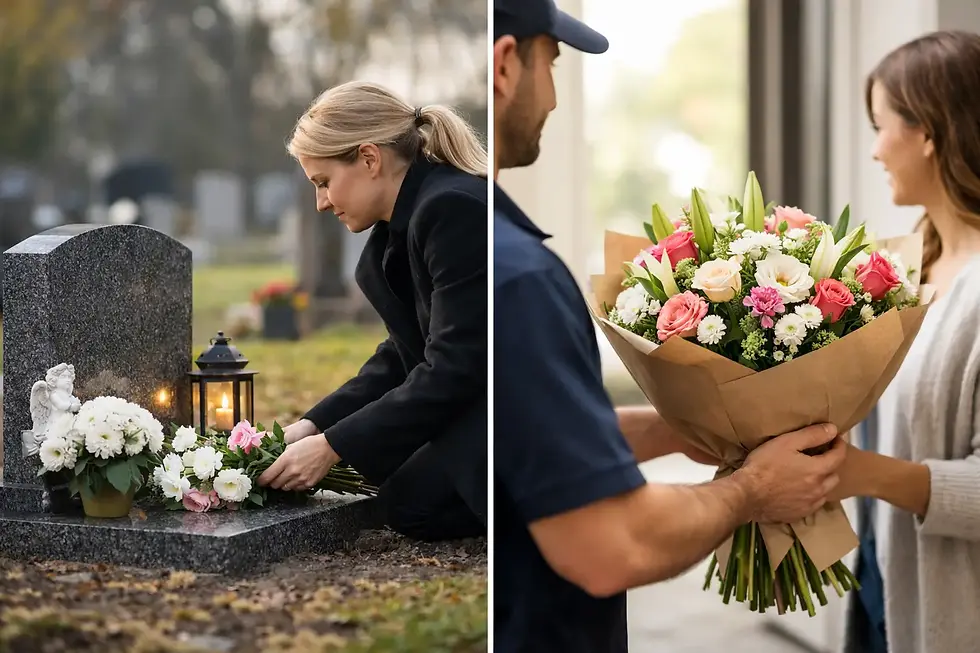
At Everlasting Visits, messages like these are read with care during a personal gravesite visit, so families who cannot travel to Central Florida can still offer flowers, prayer, and a sincere presence in their loved one’s memory.
Words for a Colleague or Employee Tribute
A workplace tribute calls for warmth while respecting the person’s professional life and their family’s grief. Focus on the qualities colleagues witnessed: generosity, steady leadership, humor, mentorship, or a commitment to serving others.
You might say: “We remember not only the work they did, but the way they treated people. Their encouragement, integrity, and presence made a lasting difference to those fortunate enough to know them.”
Avoid sharing private details or making the tribute sound like a company announcement. A thoughtful message should recognize the person first, not only their role. If appropriate, add that their colleagues are holding the family in their thoughts and prayers.
A Gentle Structure to Follow
If you are writing your remarks ahead of time, write as though you are speaking directly to your loved one. Start with their name. Share one memory, quality, or lesson. Then close with love, a prayer, or a promise to remember.
For instance: “Dad, we miss your voice and your steady way of making everything feel manageable. You taught us that family shows up for one another, especially when life is hard. We promise to carry that lesson forward. We love you, and we pray you are at peace.”
Read the words aloud once before the visit. If a sentence feels unlike your natural voice, change it. Bring the message on paper, even if you think you will remember it. At a graveside, emotion can make a familiar thought difficult to retrieve.
A tribute is not measured by eloquence. It is measured by the love behind it. Whether you offer a full prayer, a single memory, or only a quiet “I miss you,” your words can make room for remembrance - and remind a cherished life that it is still held close.

Comments