
Best Graveside Gestures for Absent Families

A birthday, anniversary, holiday, or quiet ordinary day can make the distance feel especially heavy. When travel, health, work, or personal circumstances keep you from a cemetery, the best graveside gestures for absent families offer a way to say: you are still remembered, you are still loved, and you have not been left alone.
A meaningful gesture does not need to be elaborate. What matters most is that it reflects the person being honored and is carried out with care. A few thoughtful elements, chosen with intention, can create a moment of presence even when you cannot stand at the graveside yourself.
What Makes a Graveside Gesture Meaningful?
The most comforting memorial gestures are personal rather than performative. They acknowledge the life, faith, relationships, and traditions of the person who has died. For one family, that may mean fresh flowers in a favorite color. For another, it may be a spoken prayer, a hymn played softly, or a simple message shared aloud.
It also helps to consider the timing. An annual birthday or the anniversary of a passing may call for a more formal tribute. A visit made simply because someone is missing their loved one can be quieter and just as meaningful. There is no schedule for grief, and there is no wrong reason to honor someone’s memory.
Practical details matter, too. Cemeteries may have rules about flower types, containers, decorations, or how long an item may remain at a grave. A respectful visit takes those guidelines into account so that the tribute is both heartfelt and appropriate for the setting.
Best Graveside Gestures for Absent Families
Bring fresh flowers with a personal meaning
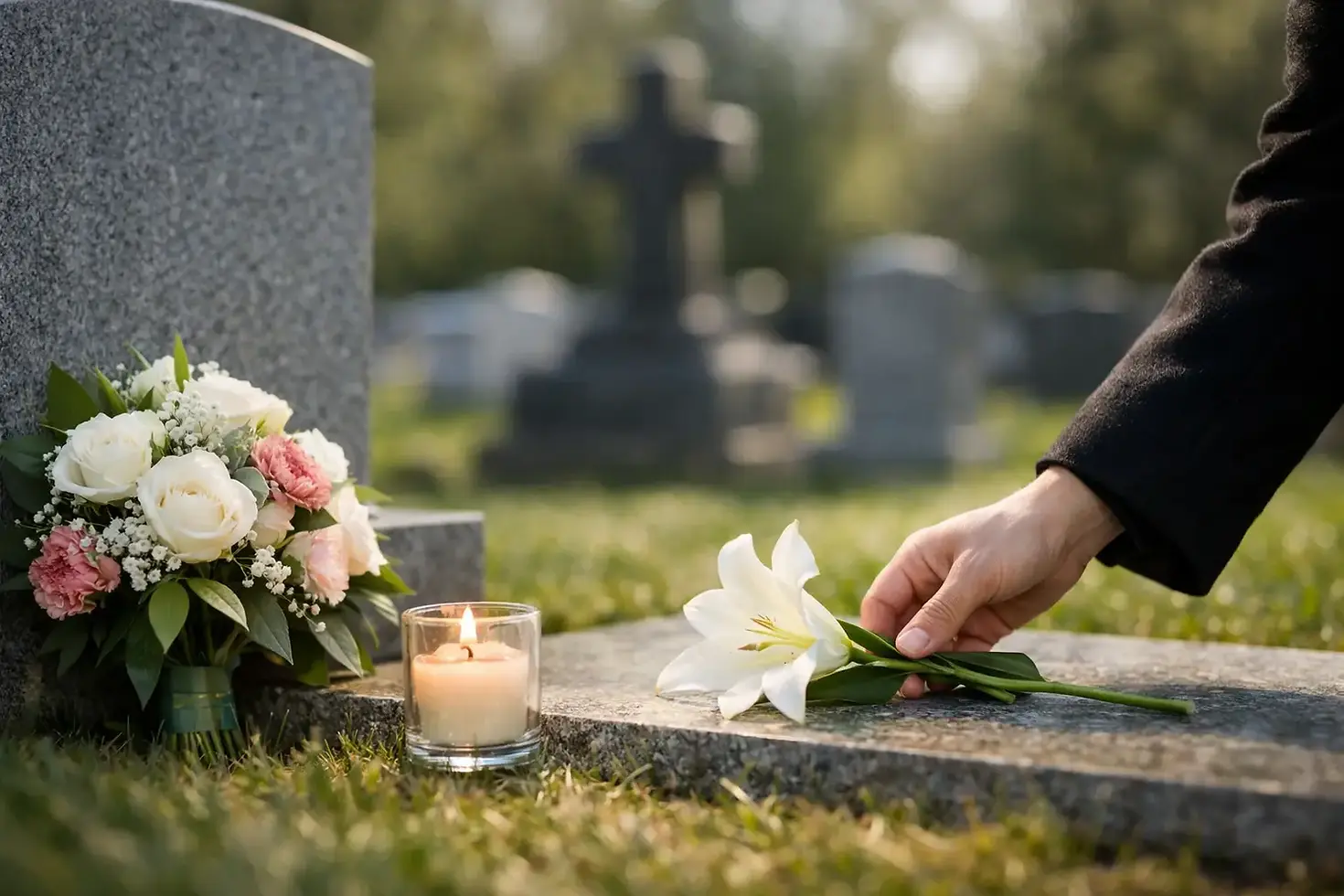
Flowers remain one of the most tender ways to mark a graveside visit. They bring color, care, and a visible expression of remembrance to a place that can otherwise feel still and distant. A seasonal bouquet is always suitable, but a more personal choice can speak even more clearly.
You might choose roses for enduring love, lilies for peace, sunflowers for someone known for warmth, or flowers in the colors they wore, loved, or grew at home. If you are unsure what would feel right, a simple, tasteful arrangement is often the best choice. The goal is not to make a grand display. It is to offer beauty in their honor.
For families who cannot visit often, it can be wise to choose an arrangement that suits the weather and cemetery policies. Fresh flowers may be deeply moving for an immediate visit, while an approved long-lasting arrangement may be more practical in certain locations.
Have a personal message read aloud
A message spoken at the graveside can make absence feel less final. It may be a few sentences from one person, a note gathered from several relatives, or words written for a special occasion. Hearing a loved one’s name and your own words spoken with gentleness creates a moment of connection that cannot be replaced by a card sent from afar.
The message does not have to be polished. In fact, the most meaningful words are often plain and honest: “We miss your laugh.” “Your grandchildren are growing so quickly.” “Thank you for the love you gave us.” “We are carrying you with us today.”
If writing feels difficult, begin with a memory. Mention a recipe they made, a phrase they often said, a lesson they taught, or a family tradition that continues because of them. A short message with a real detail can carry more comfort than a long speech.
Include prayer or a faith-centered remembrance
For families whose faith is part of their grieving and healing, prayer can bring deep comfort at the graveside. It offers a way to place sorrow, gratitude, and love before God while honoring the life of the person who has passed.
A familiar prayer may be especially reassuring, particularly if it was part of your loved one’s service or personal faith practice. Others may prefer a brief prayer in their own words, asking for peace, rest, comfort, or strength for those left behind. A scripture reading, blessing, or quiet moment of reflection can also be fitting.
Faith-centered gestures should always reflect the beliefs of the person and family being remembered. If there are different beliefs within the family, a simple, inclusive expression of love and peace may feel most respectful.
Tend the gravesite with quiet care
Sometimes the gesture that means the most is simply making sure the gravesite looks cared for. Removing fallen leaves, placing flowers neatly, straightening an approved marker decoration, or gently clearing away debris can communicate devotion without many words.
This kind of care is particularly meaningful when relatives live far away or have physical limitations that make regular visits impossible. Knowing that someone has stood at the site, treated it respectfully, and left it orderly can ease a worry that many families carry privately.
There is a tender balance here. Gravesites should be handled carefully, and nothing should be moved or removed without permission. A thoughtful visitor focuses on light, respectful tidying and follows cemetery rules at every step.
Observe a meaningful date
Dates can hold a great deal of emotion. A loved one’s birthday, wedding anniversary, military service recognition, favorite holiday, or anniversary of passing may be the day an absent family feels the loss most sharply. Planning a graveside remembrance for that date can turn a difficult day into one marked by honor.
The tribute can remain simple: flowers, a message, prayer, and a few minutes of silence. If several family members are unable to attend, each can contribute a short note or memory to be read aloud. This allows people in different places to participate in one shared act of remembrance.
An immediate gesture may also matter after unexpected news, a family milestone, or a time when grief returns with particular force. You do not have to wait for a formal occasion to let love be expressed.
Share a photo or visit record afterward
For someone who could not be there, a respectful photo of the flower arrangement or gravesite can bring reassurance. It confirms that the visit happened and allows the family to see the care that was given. A brief record of what was done - flowers placed, message read, prayer offered - can be equally comforting.
This should be handled with sensitivity. The purpose is not to document grief for display. It is to give absent loved ones a private connection to the moment and the peace of knowing their tribute was carried out as intended.
Choosing the Right Gesture for Your Family
When deciding what to arrange, start with the person you are honoring. Were they drawn to church, nature, music, family gatherings, or quiet traditions? Did they have a favorite flower, color, prayer, or saying? Let those details guide the visit.
Then consider what you need emotionally. Some people find comfort in a structured tribute with flowers, prayer, and a message. Others need only the reassurance that someone will visit, pause, and remember on their behalf. Neither choice is more loving than the other.
If more than one family member is involved, it can help to keep the gesture simple enough that everyone feels included. Ask each person for one sentence, one memory, or one small preference. This creates a shared remembrance without placing pressure on anyone to find perfect words.
For families connected to Orlando and Central Florida, Everlasting Visits provides an in-person graveside presence when distance makes a visit impossible. A carefully arranged visit can include flowers, prayer, and a personalized message read aloud, offering a dignified way for your care to reach the gravesite.
When You Feel You Have Not Done Enough
Grief often brings guilt alongside love. You may feel that you should have traveled, brought more, said more, or visited sooner. But remembrance is not measured by miles traveled or the size of an arrangement. It is measured by the sincerity behind the act.
A small gesture made with genuine care is enough. A few flowers, a prayer, a message, or a quiet visit in your name can carry a great deal of love. Your absence may be real, but it does not erase your bond.
When you cannot be at the graveside, let your gesture speak gently for you: you are remembered, you are honored, and you remain forever part of our hearts.

Comments