

Memorial Prayer at Gravesite: What to Say

Some moments at a gravesite feel quiet in a way that words almost do not fit. And yet, many people still long to say something meaningful - a few lines of prayer, a blessing, or a simple expression of love that honors the person they miss.
A memorial prayer at gravesite does not need to sound formal or polished to be deeply comforting. What matters most is sincerity. Whether you are visiting in person, asking someone to stand in for you, or planning a remembrance for a loved one in Central Florida, prayer can turn a brief visit into a sacred act of presence.
Why a memorial prayer at gravesite matters
At a gravesite, prayer often does two things at once. It honors the life of the person who has died, and it gives the living a place to set down grief for a moment. Even a short prayer can create structure in an emotional time. It marks the visit as intentional, reverent, and loving.
For some families, this is a deeply faith-based tradition. For others, it is less about religious form and more about speaking peace, gratitude, and remembrance aloud. Both are valid. A graveside prayer can be Christian, interfaith, or simply spiritual in tone, depending on your family, your beliefs, and what would feel most respectful to the loved one being honored.
This is where many people feel uncertain. They worry about saying the wrong thing or not saying enough. In truth, a memorial prayer is not judged by length. It is carried by love, honesty, and the willingness to pause and remember.
What to include in a gravesite prayer
A thoughtful prayer usually has a simple shape. It may begin by addressing God, naming the loved one, and acknowledging the purpose of the visit. From there, it often includes gratitude for the person’s life, a request for comfort or peace, and a closing blessing.
That said, every family is different. Some people want Scripture or traditional wording. Others prefer a more personal prayer that sounds like natural speech. If the person who passed was devoted to faith, a more formal prayer may feel right. If they were private or understated, a few quiet sentences may be more fitting.
You might include memories, mention an anniversary or birthday, or speak on behalf of family members who could not be present. That can be especially meaningful for those who live far away, are unable to travel, or are carrying grief from a distance. Hearing that they are remembered by name can bring comfort even when they are absent.
A simple memorial prayer at gravesite
If you are looking for words to begin with, simplicity is often best:
Dear God, we come here with love and remembrance for the life of [Name]. Thank You for the gift of their life, for the love they shared, and for the memories that remain with us. Please grant them peace and grant us comfort as we miss them. Let this place be touched by Your presence, and let our words today honor them with dignity and love. Amen.
This kind of prayer works well because it is gentle and adaptable. You can keep it as written, or you can add a sentence that reflects your relationship and your family’s faith.
If you want a more personal prayer
A personal prayer can mention specific qualities or memories. You might thank God for your mother’s kindness, your father’s steady guidance, a spouse’s devotion, or a friend’s laughter. You can also speak directly to the pain of absence.
For example:
Lord, thank You for [Name] and for the way they loved our family. Thank You for their strength, their generosity, and the way they made others feel seen. We miss them deeply. Please hold them in peace and help us carry their memory with grace. Though we cannot always be here in person, our love remains present. Amen.
That last line can be especially meaningful for long-distance family members. It recognizes a truth many people carry with quiet guilt - that distance does not lessen devotion.
When prayer is especially meaningful at the gravesite
Prayer can be appropriate at almost any visit, but there are certain times when it can feel especially needed. Anniversaries of death, birthdays, holidays, Mother’s Day, Father’s Day, and military or civic remembrance dates often stir emotion. In those moments, a prayer gives shape to what might otherwise remain unspoken.
It is also meaningful during seasons of change. A family may pray at the gravesite before a wedding, after the birth of a child, during illness, or before a major move. These visits often carry a quiet message: you are still part of this family, and we still bring our lives to this place of remembrance.
For employers or organizations honoring a colleague, a graveside prayer may also serve as a dignified gesture of respect. In that setting, the prayer should usually remain brief, warm, and considerate of varied beliefs. A simple blessing, gratitude for the person’s work and life, and a respectful pause can say a great deal.
If you cannot be there in person
For many people, the hardest part is not knowing what to say. It is knowing they cannot make the trip at all. Work obligations, health concerns, family responsibilities, cost, or emotional strain can all make travel difficult. When that happens, prayer can still be part of the visit.
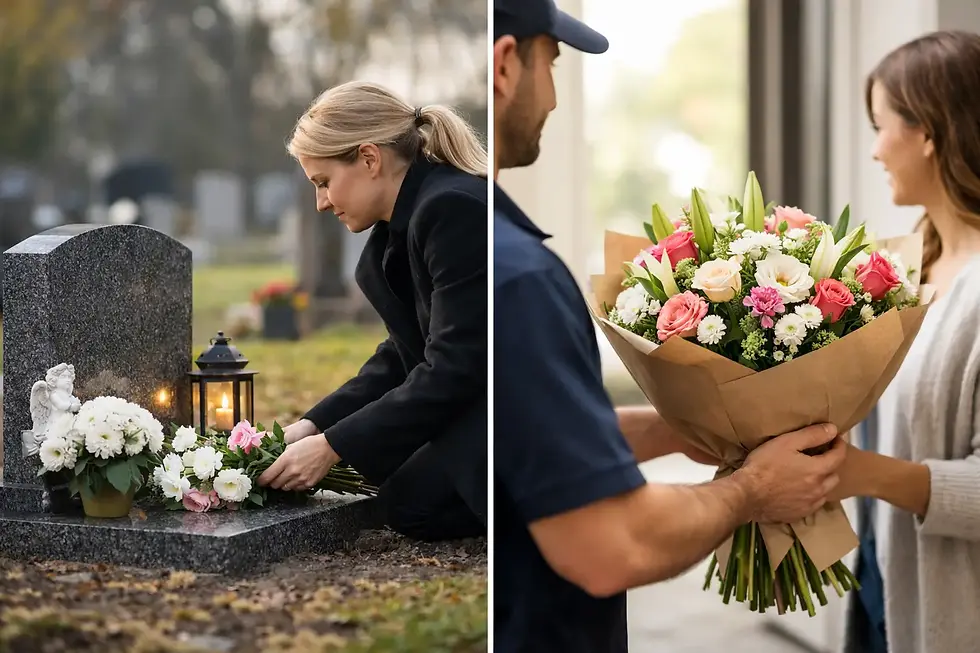
A trusted person can visit on your behalf, place flowers, read your message aloud, and offer a memorial prayer at gravesite in your name. This is not a lesser act of remembrance. For many families, it is a deeply comforting one. It says: even when I cannot stand there myself, I have not forgotten.
That kind of support matters because grief does not always follow geography. Someone may live across the country and still think every day about the parent, sibling, spouse, or friend buried in Orlando or elsewhere in Central Florida. Being absent from the gravesite can create a sense of helplessness. A respectful visit with prayer helps restore connection.
Everlasting Visits was created for exactly this need - to offer a dignified, caring presence when you cannot be there yourself, and to make sure your loved one is honored with tenderness and respect.
How to choose the right words
If you are selecting or writing a prayer, begin with the loved one rather than with what sounds impressive. Ask what would have felt true to them. Were they devoted to church? Did they value simple language? Would your family be comforted by a traditional prayer, or by words that sound more personal and conversational?
It also helps to consider the purpose of the visit. A first visit after burial may call for words of surrender, peace, and support. An anniversary visit may focus more on remembrance and gratitude. A holiday prayer may acknowledge both love and the ache of missing someone at a familiar time of year.
There is no single perfect script. Sometimes the most meaningful prayer is one short paragraph. Sometimes it is a favorite Psalm, a blessing, or even a moment of silence followed by a few words: We remember you. We love you. May you rest in peace.
That is enough.
A few gentle things to avoid
When emotions are raw, people sometimes feel pressure to explain loss, answer spiritual questions, or force comfort too quickly. A graveside prayer does not need to solve grief. It only needs to honor it.
Try not to overcomplicate the moment. Long speeches can feel heavy if the setting calls for quiet simplicity. It is also wise to avoid language that assumes every mourner feels exactly the same way. Families often carry different beliefs, different regrets, and different ways of grieving. A respectful prayer leaves room for that.
If children are present, simple words are often best. If the prayer is being offered on behalf of someone who could not attend, mention them with care. Saying their name and their relationship to the loved one can bring a strong sense of closeness.
The comfort of being remembered well
At a gravesite, people are rarely looking for perfect words. They are looking for a sign that their loved one’s life still matters, that their memory is being carried with dignity, and that love has not been interrupted by distance.
A prayer can offer that in a way few other gestures can. It slows the moment down. It speaks aloud what the heart has been holding. And it reminds us that remembrance is not only about showing up physically. It is also about intention, tenderness, and care.
If you are preparing for a visit, keep your words honest. If you cannot be there, know that a prayer spoken on your behalf can still carry your love faithfully. Sometimes a few quiet sentences at the resting place are enough to bring peace to the moment - and to the heart that has been longing to be there.

Comments