

How to Honor Gravesite Remotely With Care

A birthday passes. An anniversary arrives. Or grief simply rises without warning on an ordinary Tuesday. In those moments, knowing how to honor gravesite remotely can bring real comfort. Distance does not erase love, and being unable to travel does not mean remembrance has to wait.
For many families, the hardest part is not a lack of care. It is the ache of wanting to show up and not being able to. Work, illness, age, family obligations, finances, weather, and emotional strain can all stand in the way. When that happens, a remote act of remembrance can still be deeply personal, dignified, and sincere.
What it means to honor a gravesite from afar
To honor a gravesite remotely is to create a meaningful expression of presence without physically standing at the cemetery yourself. That might mean arranging flowers, asking someone local to visit, having a prayer spoken aloud, sending a written tribute to be read at the site, or setting aside time at home to remember your loved one in a deliberate way.
What matters most is intention. A remote tribute is not a lesser tribute just because it happens differently. In many cases, families put even more thought into these moments because they want every detail to reflect love and respect.
There is also no single right way to do it. Some people want something quiet and private. Others want a ceremonial visit with flowers, a spoken message, and a photo afterward for peace of mind. It depends on your relationship, your beliefs, and what would feel most comforting to you.
How to honor gravesite remotely in a way that feels personal
Start with the person, not the logistics. Think about what would have mattered to your loved one. Were they drawn to fresh flowers, prayer, military honors, family traditions, or simple words spoken softly? The most meaningful remote tributes often reflect the life of the person being remembered rather than following a generic script.
A personalized message can be especially powerful. Even a few sentences read aloud at the gravesite can carry great emotional weight. You might share gratitude, a memory, an apology, a prayer, or simply say that they are still loved and still missed. The language does not need to be polished. It only needs to be honest.
Timing can matter too. Some families choose holidays, birthdays, death anniversaries, Mother’s Day, Father’s Day, or religious observances. Others choose the day they finally feel ready. There is tenderness in marking a significant date, but there is also grace in honoring someone on a day that only the heart recognizes.
Choosing between private remembrance and a physical proxy visit
If you cannot travel, you generally have two paths. The first is a private remote ritual that you do yourself from home. The second is arranging for someone local to visit the gravesite on your behalf.
A private ritual may be right if you want a quiet moment and do not need the physical site tended or visited right away. You can light a candle, display a photograph, read Scripture, play meaningful music, or speak to your loved one aloud. This can be deeply healing, especially for people who are not ready for a more formal memorial act.
A proxy visit may be better when you want something tangible to happen at the gravesite itself. That could include placing flowers, pausing in prayer, standing in silence, reading a message, or sending a photo to confirm the visit took place. For families at a distance, that visible act of care can ease a very specific kind of pain.
Neither choice is more loving than the other. One is inward and personal. The other is outward and ceremonial. Some families do both.
Meaningful ways to honor gravesite remotely
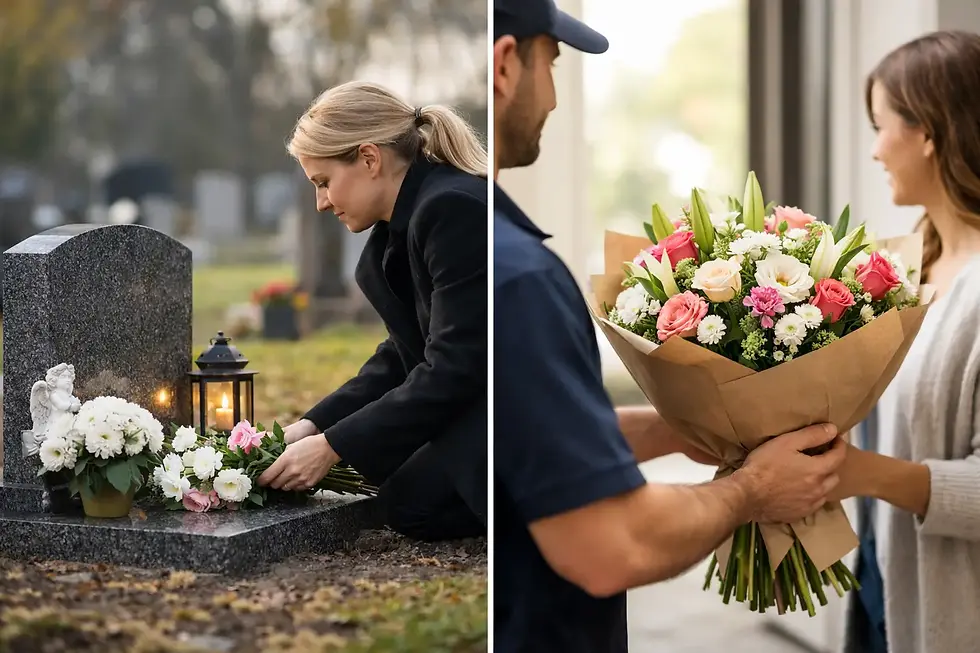
A flower placement remains one of the most recognized gestures because it says so much without needing many words. Seasonal arrangements, favorite colors, or faith-centered designs can each carry meaning. If your loved one valued simplicity, even a modest bouquet can feel just right.
Prayer is another deeply comforting option, especially for families who draw strength from faith. A spoken prayer at the gravesite can acknowledge grief while also offering peace, blessing, and remembrance. Some prefer traditional prayers. Others want something more personal. It depends on what would feel most true to the person being honored.
A written tribute adds a deeply human touch. When a message is read aloud at the gravesite, it creates a moment of presence that families often treasure. This can be especially important if final words were left unsaid or if distance has made grief feel unfinished.
Photos or a brief visit confirmation can also help. For someone far away, seeing that flowers were placed and the site was visited can replace uncertainty with relief. It does not remove grief, but it can quiet the fear that a loved one has been forgotten.
Some people also choose acts of remembrance that happen alongside the visit. You might ask family members in different places to pause at the same hour, say a prayer together by phone, or share one memory in a group message. Remote honoring does not have to be solitary.
When a local service can help
There are times when asking a trusted local service to stand in for you is the kindest option for your heart. This is often true when travel is not possible, when the cemetery is in another state, when family dynamics make visits difficult, or when a date is approaching too quickly for you to arrange everything yourself.
The key is choosing a service that understands that this is not an errand. It is an act of remembrance. You want care, reliability, and ceremonial sensitivity. The details matter - how the tribute is handled, whether your message is spoken with respect, whether prayer is offered appropriately, and whether the visit is carried out as promised.
For families connected to Orlando and Central Florida, Everlasting Visits was created for exactly this need: to provide a dignified physical presence when you cannot be there yourself. That kind of support can be especially meaningful when absence feels heavy and you want to know someone showed up with care.
How to prepare a remote tribute that brings comfort
It helps to decide what outcome matters most to you. Do you want to feel spiritually connected, mark an important date, make sure the gravesite is visited, or send a message that reflects your love? Once you know that, the choices become clearer.
Keep the tribute simple enough that it feels peaceful rather than stressful. Grief can make even small decisions feel exhausting. You do not need to create a perfect memorial moment. You only need to create an honest one.
If you are writing a message, speak naturally. Try beginning with one of three things: what you miss, what you remember, or what you hope they know. A few sincere lines are often more moving than a long statement.
If faith is central to your family, you may want to include a favorite Psalm, a prayer of peace, or words about eternal rest. If your loved one was less formal, a simple remembrance in your own voice may feel more fitting. Respecting who they were is part of honoring them well.
The emotional side of remote remembrance
Many people feel guilty when they cannot visit in person. That guilt can be sharp, especially after a funeral, on anniversaries, or during seasons when everyone else seems able to gather. But love is not measured only by miles traveled.
Sometimes the most faithful thing you can do is honor your loved one within the limits you are carrying right now. Health limitations are real. Work responsibilities are real. Financial hardship is real. So is grief itself. For some people, the barrier is not distance but the emotional weight of returning to the gravesite. That matters too.
A remote tribute can be a bridge. It allows you to stay connected while honoring your own circumstances. And for some, it becomes a lasting practice - a way to remember tenderly through the years, even when life changes.
When remote honoring is especially meaningful
This kind of remembrance often matters most on birthdays, anniversaries, holidays, Mother’s Day, Father’s Day, Veterans Day, and the first year after a loss. It can also mean a great deal when news arrives suddenly and a family or employer wants to acknowledge a passing right away.
Businesses sometimes overlook how meaningful a gravesite tribute can be for a colleague or employee. A respectful memorial presence on behalf of a workplace can communicate genuine care to the family, especially when distance or schedules make attendance difficult. Done thoughtfully, it is not performative. It is compassionate.
There are also quiet moments that never appear on a calendar. A child moves away. A spouse remarries. A parent enters assisted living. Life changes, and grief returns in a new form. Those are worthy times to remember someone too.
If you are wondering whether your gesture is enough, the answer is usually yes. A flower placed with care, a prayer spoken in faith, a message read aloud, or a moment set aside in love can carry more meaning than people realize. Absence changes the form of remembrance, but it does not cancel it.
If your heart is pulling you toward a gravesite you cannot reach today, listen to that gently. Do one small thing that reflects your love, and let that act stand as a faithful presence until you can go yourself.


Comments