

Which Flowers Are Funeral Flowers?

When someone you love has died, even a simple choice can feel heavy. If you are wondering which flowers are funeral flowers, the answer is both practical and deeply personal. Certain blooms have long been used to express sympathy, honor a life, and bring quiet beauty to a graveside or memorial, but the right choice often depends on your relationship, faith tradition, and what kind of message you want the flowers to carry.
Which flowers are funeral flowers most often?
Some flowers appear again and again in funeral services because they have become part of the language of remembrance. Lilies, roses, carnations, chrysanthemums, orchids, and hydrangeas are among the most common. They are chosen not only because they are beautiful, but because they hold up well in arrangements and have meanings that feel fitting in times of loss.
Lilies are perhaps the flower many people picture first. White lilies are especially common at funerals because they suggest peace, purity, and the hope of rest. In Christian settings, they may also carry a quiet spiritual meaning tied to the soul and resurrection. Their appearance is graceful and formal, which is why they are often used in standing sprays, altar arrangements, and graveside tributes.
Roses are also widely used, though their meaning shifts by color. White roses express reverence and innocence. Red roses speak of love and grief that runs deep. Pink roses can feel gentle and appreciative, while yellow roses may be chosen in some cases for friendship, though they are less traditional in formal funeral work. Roses are a good example of how funeral flowers can still feel personal rather than generic.
Carnations are common because they last well and carry a soft, respectful look. White carnations often represent pure love and remembrance. Pink carnations are sometimes chosen for a mother or maternal figure, while red carnations can be used to reflect admiration and affection. They are often included in wreaths, crosses, and mixed sympathy bouquets.
Chrysanthemums, often called mums, are strongly associated with mourning in many cultures. In the United States, they are a standard sympathy flower and are often used in funeral baskets and graveside pieces. White mums are especially traditional. Their full shape gives arrangements a sense of fullness and dignity without feeling overly ornate.
Orchids bring a quieter, more modern elegance. White or soft pink orchids are often chosen when someone wants to send sympathy in a refined and lasting way. They can feel especially appropriate for a home memorial, a visitation, or a tribute meant to convey enduring love.
What each funeral flower can mean
Flowers say something even when no words feel adequate. That is one reason they remain such an important part of memorial traditions.
White flowers in general are the most traditional choice for funerals. They convey peace, purity, reverence, and rest. If you are unsure what to send, white is usually a safe and thoughtful direction. White lilies, white roses, white carnations, and white chrysanthemums all fit naturally in funeral settings.
Soft pink flowers often communicate gratitude, tenderness, and remembrance. They may feel especially fitting when honoring a parent, grandparent, child, or close friend whose memory brings warmth along with sorrow.
Red flowers are less restrained, but they can be deeply appropriate. Red roses or carnations may be chosen by a spouse, partner, or immediate family member to express devoted love. They can add emotional depth to an arrangement, especially when mixed with white.
Blue and purple flowers are sometimes added for a sense of peace, dignity, or faith. Flowers such as delphinium, iris, or lavender-toned blooms may be included in sympathy arrangements when a family wants something serene but not strictly traditional.
This is where it helps to remember that flower meaning is not fixed in every family. One person may see lilies as formal and comforting. Another may think immediately of Easter, church, or a parent who loved their fragrance. The best funeral flowers are often the ones that honor both tradition and memory.
Which flowers are funeral flowers for different relationships?
The relationship matters. Flowers sent by a spouse, child, sibling, friend, coworker, or employer do not always need to say the same thing.
Immediate family often chooses larger or more personal arrangements. Casket sprays, standing sprays, wreaths, or custom pieces may include roses, lilies, carnations, and meaningful colors. These arrangements tend to be more intimate in message and may reflect the loved one's personality, faith, or favorite flowers.
Extended family and close friends often send sympathy baskets, vase arrangements, or graveside flowers. A mixed arrangement of lilies, roses, mums, and carnations is common because it feels respectful without overstepping.
Coworkers or companies usually choose something dignified and understated. White lilies, white roses, orchids, or elegant mixed sympathy arrangements are often suitable. In a professional setting, the goal is to honor the person with sincerity while remaining appropriate for the relationship.
For graveside visits after the funeral, families often prefer flowers that feel simple, fresh, and reverent. Roses, carnations, chrysanthemums, and seasonal flowers are common choices. At the gravesite, the gesture itself often matters even more than the complexity of the arrangement.
Traditional choices and personal choices
There is comfort in tradition, especially in moments when decisions feel hard. Choosing a classic funeral flower can relieve some pressure because it follows a path many families recognize. Lilies, roses, carnations, and mums are traditional for a reason. They communicate sympathy clearly and gently.
At the same time, personal choices can be just as meaningful. If your father always planted sunflowers, a sunflower tribute may feel more honest than a formal white spray. If your grandmother loved garden roses or purple iris, those flowers can become part of a remembrance that feels true to her life.
The main trade-off is setting. A church service, formal funeral home, or military ceremony may call for more classic arrangements. A private memorial, home gathering, or graveside visit may leave more room for flowers that reflect personality. Neither approach is wrong. It depends on the family, the service, and what feels respectful.
Flowers to approach with care
Not every beautiful flower is automatically right for every funeral. Bright tropical flowers, strongly cheerful color palettes, or highly festive arrangements may feel out of place in a traditional service unless they clearly reflect the loved one's wishes or heritage.
Fragrance is another consideration. Some flowers, especially lilies, can have a strong scent. Many people find that comforting, but in enclosed spaces or hospital chapels it may be too much. If you know the setting is small or the family is sensitive to fragrance, roses, carnations, orchids, or hydrangeas may be gentler choices.
Cultural and religious traditions also matter. Some families welcome specific colors, flower types, or symbols. Others prefer simplicity, or even ask for no flowers at all. If the obituary or family request gives guidance, it is wise to follow that lead.
Choosing flowers for a graveside remembrance
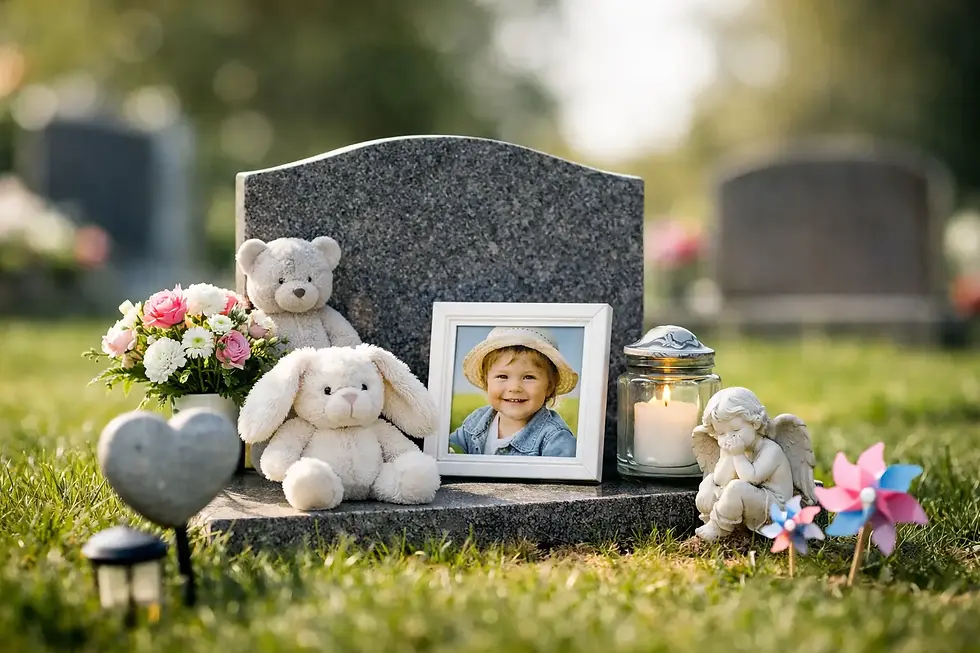
A graveside visit carries its own tenderness. The flowers are not only decorative. They become a quiet sign that someone came, paused, prayed, remembered, and stood in love at that place.
For a graveside remembrance, durability matters more than people sometimes realize. Carnations, mums, roses, and orchids often hold up better than delicate blooms in heat or wind. In Florida, especially, weather can shape what works best. A beautiful arrangement should still look cared for when it is placed.
Color also tends to read differently outdoors. White flowers remain timeless and peaceful at a gravesite, while soft pinks and gentle mixed palettes can feel warm without being overwhelming. If the tribute includes a prayer or spoken message, the flowers often serve as a visual expression of that same care.
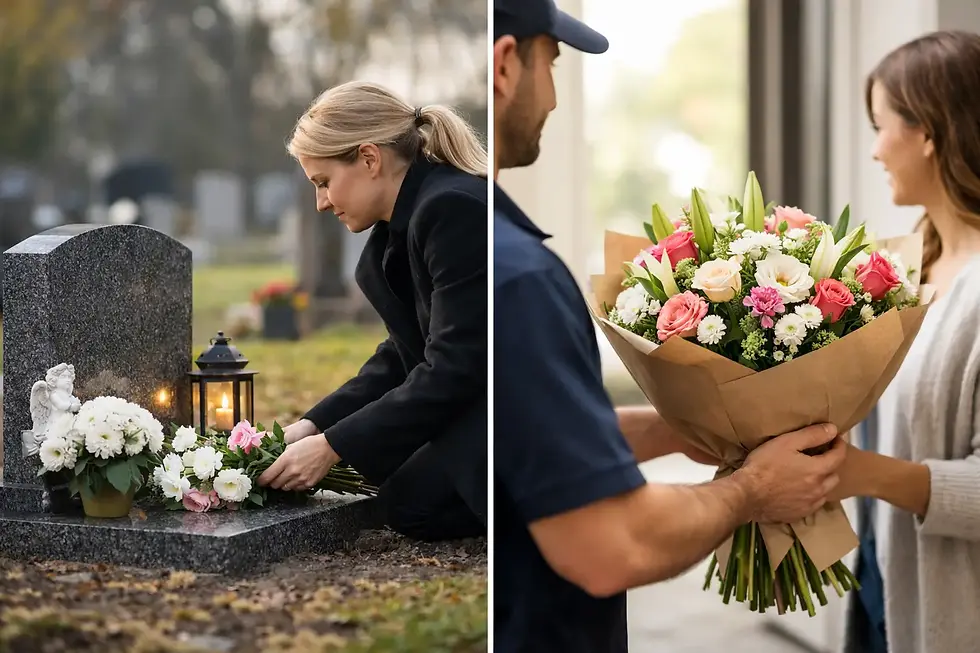
For families who live far away, this can be especially meaningful. When you cannot be there in person, sending flowers to the gravesite can say, with tenderness and dignity, you are still remembered, still loved, still visited. That is part of why services like Everlasting Visits matter to so many families. The flowers are one part of a larger act of presence.
So, what should you choose?
If you need a clear place to begin, choose white lilies, white roses, carnations, or chrysanthemums. These are the most recognized funeral flowers and are almost always appropriate. If you want something softer and more personal, consider pink roses, orchids, or a mixed arrangement in gentle colors. If you are honoring a very close loved one, you may want to include a flower they loved in life, even if it is less traditional.
The kindest choice is rarely the most elaborate one. It is the one that feels sincere, respectful, and fitting for the person being remembered. Flowers do not remove grief, but they can offer a visible expression of love when words come slowly.
If you are choosing in the middle of sorrow, let simplicity guide you. A thoughtful flower, placed with care, can carry more comfort than you may realize.

Comments