

8 Best Ways to Remember From Afar With Love

A birthday arrives. An anniversary appears on the calendar. Or a quiet Sunday brings the realization that it has been too long since you stood at their resting place. Distance can make these moments feel heavier, especially when a loved one is buried in Central Florida and you cannot be there yourself. The best ways to remember from afar do not erase that longing, but they can give your love a clear, caring place to go.
Remembrance does not have to be postponed until the next visit home. A small ritual, a spoken prayer, or a thoughtful act at the gravesite can honor a life with the dignity it deserves. What matters most is choosing something that feels true to your relationship and possible in this season of life.
The Best Ways to Remember From Afar Begin With Intention
There is no single right way to grieve or to keep someone close. Some families find comfort in faith and prayer. Others feel most connected through stories, music, flowers, or acts of service. Before deciding what to do, take a gentle moment to ask: What would make this day feel meaningful? What did they value? What do I wish I could say if I were standing beside them?
That intention can guide every choice that follows. It also takes pressure off the idea of creating a perfect tribute. A sincere act of remembrance, however simple, is enough.
1. Set aside a personal time of remembrance
Choose a time when you can be undistracted for a few minutes. Light a candle, place their photograph nearby, sit outside, or hold an item that reminds you of them. You might read a favorite passage, play a song they loved, or simply speak their name aloud.
Regular rituals can be especially comforting when travel is difficult because of health, work, finances, or family responsibilities. You may choose a monthly date, a holiday, or meaningful milestones such as their birthday. The ritual does not need to be long. Its value comes from returning to it with care.
2. Write the words you would say at the gravesite
Many people carry unsaid words after a loss. Writing a letter can offer a private and honest way to express them. Share an update from your life, recall a memory, ask for strength, or say the words that are still on your heart.
You can keep the letter in a memory box, read it during a quiet moment, or ask that it be read aloud during a gravesite visit. For some people, hearing that message spoken at their loved one’s resting place brings a sense of closeness that a text or social media post cannot provide.
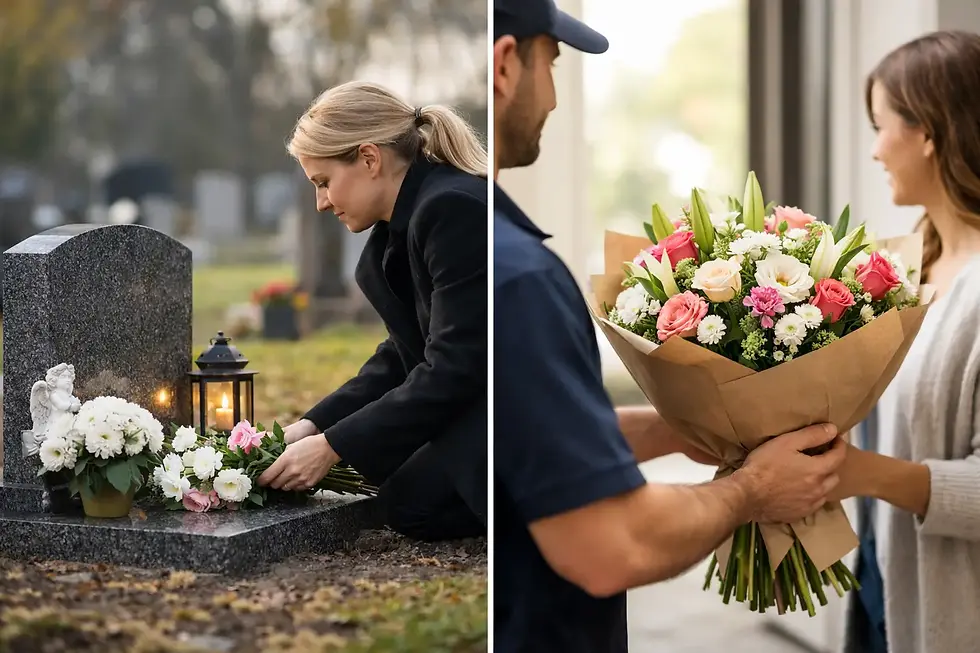
3. Send flowers with a meaning that feels personal
Flowers are a familiar expression of love, but they do not have to be generic. Consider blooms tied to a memory: the flowers from a wedding bouquet, a garden they tended, a favorite color, or a seasonal arrangement that reflects the time of year.
A gravesite flower placement can be a tender choice when you cannot make the journey. If you are arranging it from a distance, clarity matters. Confirm the cemetery location, the name on the marker, the visit date, and any cemetery rules about floral arrangements. A dependable local service can handle those details while preserving the personal meaning behind your selection.
4. Ask for a prayer or blessing in their honor
For faith-centered families, prayer can make distance feel less final. You may pray from your own home at the same time a loved one is being honored at the cemetery, inviting family members in different places to join in. A short prayer for peace, gratitude, rest, or continued guidance can become a meaningful family tradition.
If your loved one belonged to a particular faith community, a prayer or blessing that respects those beliefs may feel especially fitting. Keep the language personal and sincere. It is not about saying the most elaborate words. It is about placing love, remembrance, and hope into the moment.
5. Arrange a respectful gravesite visit on your behalf
Sometimes the deepest comfort comes from knowing that someone was physically present when you could not be. A proxy memorial visit can include flowers placed with care, a personalized message read aloud, a prayer, and a moment of quiet respect at the gravesite.
This option can be particularly helpful for an urgent anniversary, a recent loss, or a time when travel is simply out of reach. Everlasting Visits provides this kind of personal memorial presence in Orlando and Central Florida, so families can honor someone they love with a dignified visit even from miles away.
When choosing any service, look for clear communication and a reverent approach. You should feel confident that your loved one’s name, location, and wishes will be handled thoughtfully, not treated as a routine errand.
6. Share a memory with the people who loved them
Grief can become isolating when everyone assumes they should stay quiet. Reaching out to a sibling, old friend, colleague, or relative with one specific memory can open a gentle conversation. You might say, “I was thinking about the way she always made everyone laugh at dinner,” or “I remembered his advice today.”
This is not an obligation to host a large gathering or revisit painful details before you are ready. One phone call, voice message, or handwritten note can be enough. You may learn something new about the person you miss, and the shared remembrance can remind everyone that their life continues to matter.
7. Honor their values through a small act of kindness
A meaningful tribute often reflects how a person lived. If they cared for neighbors, bring a meal to someone who needs one. If they loved animals, support a local shelter. If they were known for encouraging others, send a note to someone facing a hard week.
Acts of kindness do not replace a gravesite visit or a private moment of mourning. They offer another way to carry a loved one’s influence forward. The best choice depends on the person you are honoring and your own emotional capacity. On some days, lighting a candle is enough. On others, you may feel ready to give more.
8. Create a memory practice that can grow over time
Rather than waiting for major dates, create a simple way to collect memories as they arise. Keep a notebook, a private digital folder, or a box for photographs and mementos. Add a sentence whenever something reminds you of them: a recipe, a familiar saying, a place you passed, or a lesson they taught you.
Over time, this becomes more than an archive. It becomes evidence of an ongoing relationship shaped by memory, gratitude, and love. It can also be a gift for children and grandchildren who may want to know the stories behind a name on a headstone.
When Distance Brings Guilt, Meet Yourself With Grace
Not being able to visit in person can bring guilt, even when the reasons are completely valid. A demanding job, limited mobility, caregiving duties, financial strain, or the emotional weight of returning to the cemetery can all make travel difficult. None of these reasons means you loved the person any less.
Physical presence is meaningful, but love is not measured only by miles traveled. A prayer whispered at home, flowers placed in your name, or a message read at the gravesite can be an honest expression of devotion. Let the tribute fit your circumstances instead of judging yourself for what is not possible right now.
Let the Tribute Be Personal, Not Perfect
The most meaningful remembrance is usually the one that reflects the person themselves. A formal arrangement may be right for one family, while a modest bouquet and a few spoken words may feel right for another. There is room for tradition, faith, silence, tears, and even laughter when a happy memory appears.
When you cannot stand at the gravesite yourself, choose one caring action and give it your full heart. Love has a way of reaching beyond distance, especially when it is offered with intention, dignity, and remembrance.


Comments